
Read Osborne Property Tax Records
Osborne splits tax work between two offices. The appraiser sets parcel characteristics and values. The treasurer handles the statement, installments, payment, delinquency, and foreclosure eligibility. Kansas derives assessed value from appraised value times the classification rate, then applies the mill levy to produce the tax.
| Field | What It Shows | Where |
|---|---|---|
| Appraised value | County estimate used in the tax process | Appraiser record |
| Assessed value | Taxable value after the class rate | Appraiser record |
| Property class | Classification that controls the rate | Appraiser and state rules |
| Tax bill and status | Statement, installments, and payment | Treasurer |
| Foreclosure eligibility | A public lead based on delinquency | Treasurer list |
Kansas assesses residential property at 11.5 percent. Agricultural land is use-valued. Commercial and industrial real property carries 25 percent, so a sale amount, an appraised value, an assessed value, and a final tax bill are four different numbers.
Osborne's November Tax Cycle
Osborne tax statements are mailed in November, says the county treasurer's property-tax page. The first half is due December 20. The second half is due May 10. Interest accrues after those deadlines, and unpaid personal property falls due in full with interest after December 20.
Three delinquent years can make a real-estate parcel eligible for tax foreclosure. Eligibility is not a sale. It is not the current balance either. Verify status with Treasurer Bobbi Jo Boxum at 785-346-2251, then check the court record and the deed record when ownership may have changed.
Kansas Payment Is Not History
The Kansas.gov payment service asks you to pick your county and enter statement and payment details. It is not an open historical tax-roll search. Treat it as the current payment workflow rather than a way to pull years of balances from a blank public query.
For a single parcel, the CIC appraiser entry is the better first online stop, though its live Osborne fields could not be inspected. Should the dynamic page fail, call the appraiser at 785-346-2310 or request an existing parcel card under KORA.
Osborne's 2024 Tax Mix
Osborne County's official 2024 summary listed $66,910,443 in taxable value and $11,072,930 in ad valorem tax. Agricultural land carried 39.87 percent of the taxable value. Residential property held 23.37 percent. Public utility accounted for 17.08 percent and commercial real property 9.18 percent, with agricultural improvements and oil and gas listed separately.
Those totals explain a trap. A house in Osborne, a commercial parcel in Downs, and a rural tract near Natoma all get different assessment treatment, so match class and tax year before comparing. County totals give context, not a parcel estimate.
Look Up an Osborne Tax Bill
Start with the exact parcel and tax year. Save the legal description and identifier before moving from the appraiser to the treasurer. The mailing address alone never proves residency.
- Use CIC public access if available, or request the parcel card from the appraiser.
- Match the legal description and parcel reference to the tax statement.
- Confirm current balance and installment status with the treasurer or payment route.
- If delinquency appears, check the eligibility list, court file, and later deed before drawing a conclusion.
- Assessed value
- The amount produced from appraised value and the class rate.
- Mill levy
- The rate applied to assessed value to calculate tax.
- Appraised value
- The county value used before applying the assessment rate.
- Tax lien
- A recorded claim connected with unpaid tax.
Osborne's Six-Year Inspection
Under K.S.A. 79-1476, the appraiser inspects each property at least once every six years. These inspections generally run from May through September. Staff may photograph properties along the way. They also confirm house or outbuilding characteristics. Keep that cycle separate from the portal's database refresh timestamp.
Inspection information serves to correct a parcel's physical characteristics. A changing CIC timestamp only tells you when system data was updated. Neither one establishes the date of a sale or deed transfer.
Osborne's 2026 Market Study
Osborne's 2026 market study pointed to a general upward trend across residential, commercial, and vacant-lot markets. The same study carried a caution. An individual property can diverge because characteristics were corrected, the property changed, or market conditions shifted. The trend supports the county, not a price promise for one parcel. Compare like classes and the same tax year. A recorded sale is not the assessed value.
Osborne Foreclosure List Limits
The treasurer's foreclosure page lists names, legal descriptions, and tax identifiers for eligible Osborne properties. Entries span city additions and tracts such as Alton's Fifield's 2nd. Others include Natoma's Union Tracts, Austin, Madden, and Ray.
The list is only a lead. It does not prove a sale, name every prior owner, or replace a live balance. Confirm with the treasurer first. Then find the district-court case, check sale notices, and inspect the later deed record.
Osborne Tax Access Channels
The CIC public-access entry is the county's first online parcel lookup, but its live Osborne fields are not guaranteed to display. The Kansas.gov payment page handles tax payments and requires statement details, so it should not be mistaken for a historical tax database. Phone and mail remain reliable. For an assessment card, call county appraiser Anna Porter at 785-346-2310 or submit a KORA request.
Treasurer Bobbi Jo Boxum can confirm statements, installments, delinquency, and foreclosure status at 785-346-2251. The treasurer's office sits at 423 W Main Street in Osborne. It is open weekdays from 8:30 a.m. to noon and 1 to 5 p.m. Mail goes to PO Box 160, Osborne, KS 67473.
A strong KORA request names the parcel, legal description, tax year, and the exact record wanted. The county charges 25 cents per side for standard black-and-white letter copies. Search time runs $7 per hour. KORA covers records that already exist, so it cannot force the creation of a new tax report.
Check Osborne Tax Classifications
In Kansas, class determines how appraised value becomes assessed value. Residential property is assessed at 11.5 percent of appraised value. Commercial and industrial real property carries a 25 percent rate. Agricultural land is valued by its use rather than the market. Public utilities, oil and gas, agricultural improvements, and other classes each appear separately in county summaries.
Always confirm class before comparing parcels. A city residence, a storefront, utility property, and a farm tract can show very different ratios. Their appraised figures can look nearly identical. An exemption or classification indicator on a live card is not proof of occupancy or title. Osborne does not publish its exemption field labels.
The tax statement simply applies levies to assessed value. It will not convert that figure into an appraisal for sale. Nor does the levy identify the current owner of record.
Challenge an Osborne Assessment
Kansas allows an informal appeal after the valuation notice. Later routes run through state procedures, including the Board of Tax Appeals. The exact filing window comes from the current notice and calendar. Bring the parcel record, photos, corrected characteristics, and comparable evidence to the appraiser. Appealing the tax bill alone can mean missing the valuation deadline.
Appeal window. Read the deadline printed on the current valuation notice and verify the route through the Kansas property valuation appeals page.
The Kansas Department of Revenue appeals page lists the current review path:
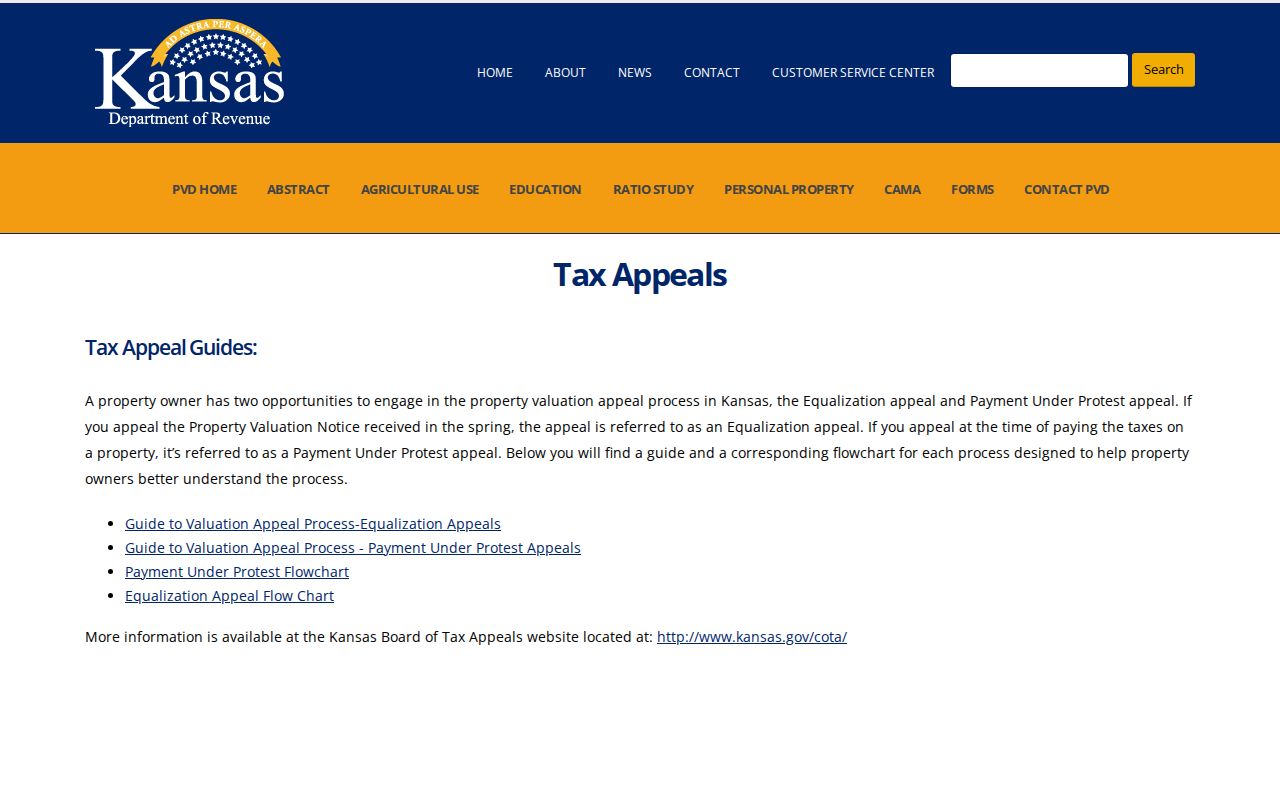
That state page holds the live appeal framework. The deadline on the current Osborne County notice still controls the first step. Before any appeal, the Osborne County property value explanation sorts out assessed, appraised, and sale figures.
Prepare an Osborne Value Review
Start with the valuation notice and the parcel card for the same tax year. Check the situs, legal description, property class, and acreage. Check the land and building entries too. Note any characteristics that shape the appraised figure. The county inspects property on a six-year cycle. That can surface changes. But it does not guarantee every current feature is right. Mark factual errors and back each one with dated photographs, measurements, permits, or other records.
Comparables should match the property type and the valuation date. A rural agricultural tract, an Osborne residence, a Downs commercial parcel, and a Natoma vacant lot do not belong in one comparison. Prices being close is not enough. Kansas classification rates and use valuation can yield different assessed figures from different appraised figures. Match like with like.
Contact the county appraiser early. Follow the deadline printed on the valuation notice. The informal meeting is the first chance to review facts and valuation evidence. Later appeal routes rest with the Kansas Department of Revenue and the Board of Tax Appeals. Filing rules rest there too. Keep copies of the notice, the evidence submitted, the meeting result, and any later order.
Separate Tax Liens From Bills
A tax statement shows the parcel's bill and payment schedule. A tax lien or foreclosure case is a different record trail entirely. The treasurer's eligibility list can open that trail. But it must be checked against the current treasurer account, the district-court case, the sale notice, and any later deed. A name on the list does not prove who owns the parcel now.
Use the legal description as the cross-reference. Tax identifiers, owner labels, and addresses can change or follow different formats. The recorded deed answers transfer questions. The court file documents litigation and orders. Keeping those roles separate matters. It keeps an old delinquency lead from being reported as a current tax or ownership fact.