
Trace Back Osborne County Owners
Osborne County's ownership history lives in its recorded conveyances. Find the newest deed for the exact legal description. Read its grantor. Then locate the deed by which that grantor bought the same land, and repeat the step up the chain. The Register of Deeds keeps computer indexing, scans, and microfilm in the office, though the county publishes no remote public index and cites no cutoff year.
| Source | Years It Covers | Where Held | What It Shows |
|---|---|---|---|
| Latest recorded deed | Current transfer | Register of Deeds | Grantor, grantee, type, book/page |
| Indexed scans | Cutoff unpublished | Recorder office | Recorded prior transfers |
| Microfilmed deed books | Older holdings | Recorder office | Earlier owners and descriptions |
| Historic plat books | 1900 and about 1917 | Kansas Historical Society | Period owners and map context |
Anchor each transfer by book and page. A name match alone can mislead. For older land, set the deed description beside a historic plat, then return to the county deed book for the recorded instrument itself.
Reconstruct Osborne County's Deed Chain
Each grantee unlocks an earlier deed. Osborne County publishes no online index for the search. Ask the Register of Deeds for help by providing exact names, dates, and the full legal description of the parcel.
- Find the newest deed and record its date, grantee, grantor, type, and book/page.
- Treat that grantor as a previous owner, then locate their acquisition deed.
- Compare the legal description at each link and note splits or changed acreage.
- Continue through scans, microfilm, and books without assuming an online cutoff.
- Grantor / grantee
- The parties transferring and receiving the recorded interest.
- Chain of title
- The ordered links of deeds for the same land.
- Legal description
- The durable land identity used to prevent false name matches.
Bridge Osborne County's Older Records
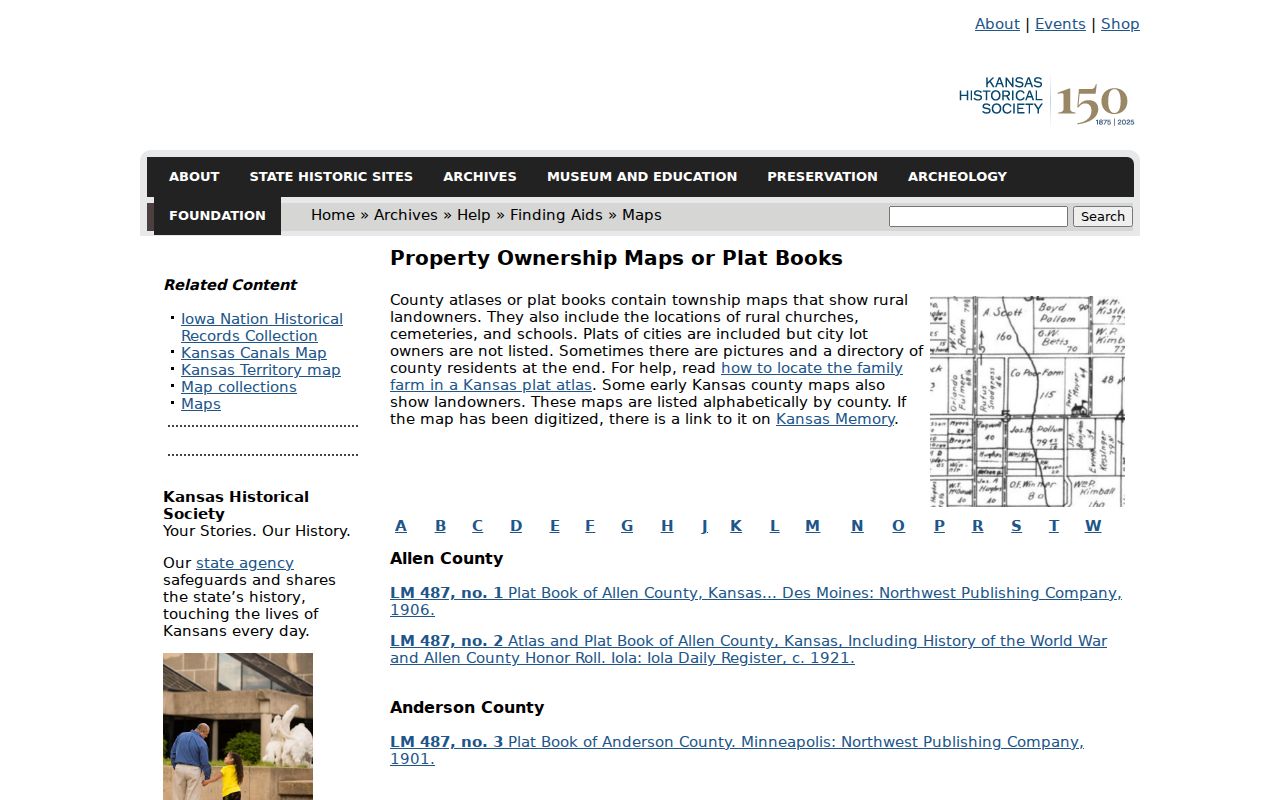
The Kansas Historical Society catalog lists Osborne County ownership maps from 1900 and about 1917, and they can revive an old owner name, road, or town layout. They are not current title records, however.
Archives fill the gap when a chain fades. The local newspaper archive carries title runs from the 1880s through 2008. Search names beside terms like deed, probate, sheriff sale, tax, addition, or farm. Then verify every lead in the recorded deed book.
Resolve Osborne County Estate Links
A death can interrupt a plain buyer-to-seller chain. Probate left its own paper. Watch for executor deeds, administrator deeds, and affidavits. Kansas CaseSearch and the local District Court clerk can identify the probate case, and the recorded instrument connects it to the parcel. Match dates and legal descriptions, since a family name repeated across generations makes a weak key.
Request Osborne County Ownership History
Three routes open the records. Call 785-346-2452, visit the courthouse, or submit the county KORA request form. Ask for index entries and images by grantor, grantee, date span, deed type, and legal description. KORA does not require the office to assemble a title history. The requester connects the entries. A focused request also trims possible search and copy charges.
Track Osborne County Land Splits
A chain can break when the land description changes. One owner acquired a larger tract and later conveyed only a lot, strip, or divided acreage. Compare every call in the new deed against the prior instrument, logging section, township, range, addition, lot, block, fraction, acreage, and each exception. A shared surname never cures a land mismatch.
City descriptions need their named addition. Examples include Rader's and Yoxalls 2nd in Osborne, original-town wording in Downs, and Union Tracts, Austin, Madden, and Ray variants in Natoma. Search apostrophes, plurals, and abbreviations. Preserve the recorded wording in the final chain. A plat shows how the smaller parcel fits its parent tract.
Rural descriptions may rest on federal survey calls rather than streets. When a tract split, record two deeds. Log the deed creating the new description. Also log the deed by which the grantor obtained the parent land, which keeps each former owner attached to the correct piece of Osborne County ground.
Test Osborne County Sale Clues
Tax-foreclosure lists carry real legal-description clues. A published list is not a final ownership statement. Status shifts, sales fall through, and deeds get recorded late. Use the list to surface a tax ID, owner spelling, tract, addition, or lot-block phrase. Then ask the Treasurer for current status. Ask the Register of Deeds for the instrument that actually moved title.
Sheriff, tax, quitclaim, executor, and administrator deeds all surface in past-owner trails. Each label names a form or circumstance of transfer. None proves every interest was resolved, so record the instrument type without drawing a legal conclusion.
A court case may explain a deed. Search Kansas CaseSearch by party name and date range. Compare the court order with the recorded land instrument, since the deed itself remains the link to the parcel.
Osborne Names Cross Local Archives
The Osborne County Veterans Register reaches from 1866 through 2000. It blends Register of Deeds entries with cemetery records, local books, and newspapers from five cities. That breadth makes it a useful name index. It spans several record types at once. A match can help separate people, dates, or communities while you trace prior owners. It never replaces a recorded conveyance.
Treat an archive hit as a hypothesis. Test middle initials, spouse or estate wording, township, city, and dates against the deed index. The newspaper archive also holds long title runs for Osborne, Downs, Natoma, Alton, and Portis. Rural delivery routes and family ties often crossed town lines. So search the same name in more than one paper.
Keep the archive citation. Then return to the recorded book and page. That habit adds human context. It never lets an obituary, military register, or news notice stand in as proof of land ownership.
Read Deed Types as History
An instrument label explains only part of a transfer. Read it beside the parties and the legal description. A warranty deed, quitclaim deed, sheriff deed, executor deed, administrator deed, or transfer-on-death instrument can place a new name in the chain for very different reasons. Price, family ties, and title quality do not follow from the label alone.
Ask for the full recorded image. An index row is not enough. Work through the granting clause, the execution and recording dates, the legal description, exceptions, and any references to earlier books or pages. A release may concern a lien without changing the owner. A correction deed may fix wording while the core transfer stands.
Log what each instrument actually did. This keeps deed mechanics honest. It also protects the former-owner timeline from false jumps.
Audit Osborne County Prior Owners
Once you have traced backward, review the chain from oldest to newest. Every grantee should later appear as a grantor. An estate, court order, entity change, or other recorded event should explain any break. The land description should stay constant or show a documented split, combination, replat, or exception.
Build one row per transfer. Include the date, grantor, grantee, deed type, book and page, and a legal-description note. Mark uncertain links instead of smoothing them over. When an owner name shifts through marriage, estate administration, or a trust, request the instrument that connects the names. The same goes for a business filing.
The finished list is a research chronology, not a certified title search. Confirm material gaps with the Register of Deeds. Do this before any purchase, estate filing, or boundary decision.
Reach Osborne County's Earliest Owners
The county publishes no official online cutoff year. Older prior owners remain a deed-book and microfilm task. Federal tract books and historical plats add context. Survey work began in 1862, and the county organized in 1871 after an early attachment to Mitchell County. Very early research may therefore need a parent-county or federal-land route. Record each archive and date as you go.
Lawful use. Trace former owners for house history and property diligence. Never use the record trail to track, harass, or harm anyone.