
Check Osborne County Owner Fields
The CIC public-access portal is the first current-owner stop. Its Osborne County result card is built dynamically on the live site. Treat the fields as a checklist to verify. Because output can vary, confirm each field in the linked Osborne County appraiser entry itself, which opens on the official starting screen.
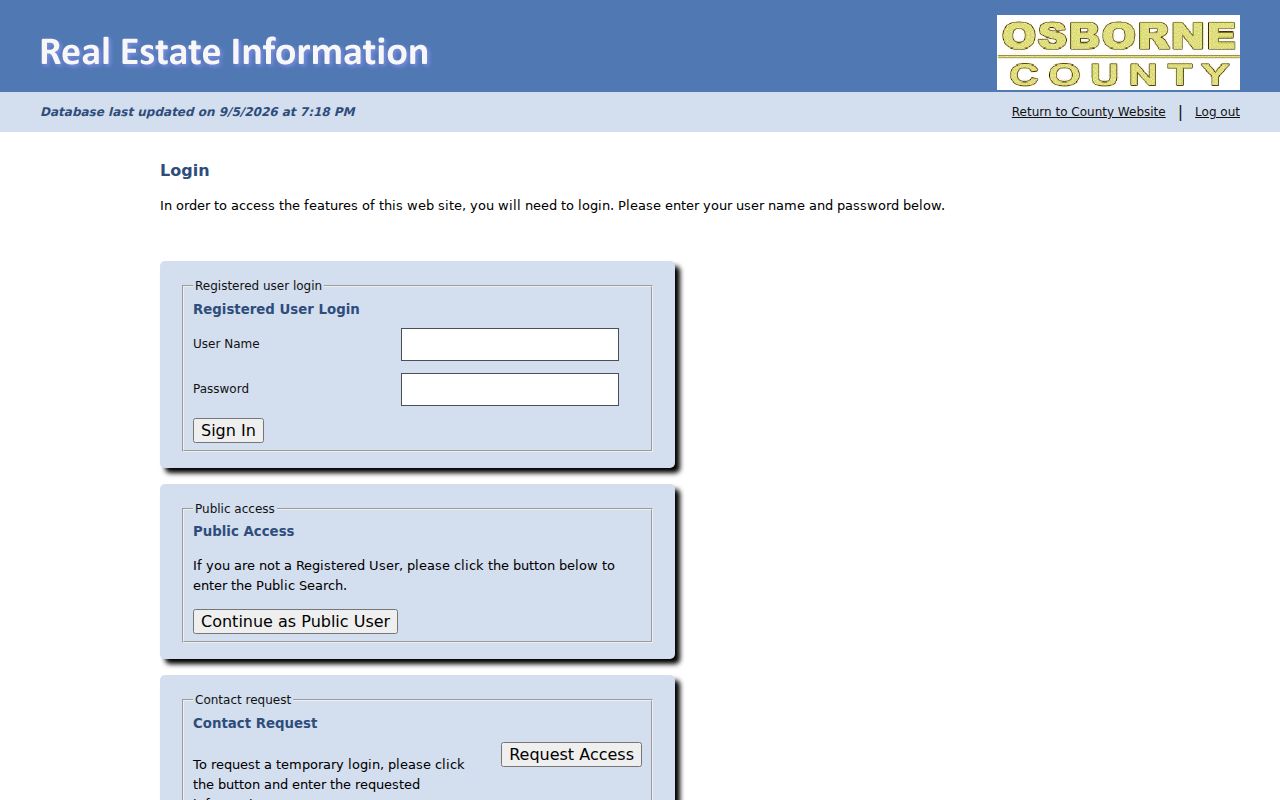
The portal view confirms the public-access route. The appraisal roll and the newest deed supply the facts behind any current-owner decision.
| Owner Name | Exact label on the live roll |
|---|---|
| Mailing Address | Destination for notices |
| Situs Address | Physical parcel location |
| Parcel ID | Tax, map, and record cross-reference |
| Deed Reference | Recorded instrument link, if exposed |
| Update Date | Measure of database freshness |
The owner of record is not always the occupant. Estates, entities, lenders, care-of recipients, post office boxes, and out-of-county owners can all push mailing and situs addresses apart.
Confirm Osborne County Ownership Now
Compare the roll against the newest deed. Both should carry the same legal description. The Osborne County Register of Deeds reports computer indexing, scans, and microfilm, but publishes no public remote index, so call 785-346-2452 or send a focused request.
- Copy the roll owner, parcel ID, description, and update date.
- Ask for the latest deed indexed to that description.
- Read the grantee exactly, including trust or entity wording.
- Resolve a Kansas entity without treating its agent as owner.
- Owner of record
- The party named on the roll.
- Vesting
- The wording that states how an interest is held.
- Registered agent
- The legal contact for an entity, not necessarily its owner.
Measure Osborne County Record Freshness
The CIC entry can display a database update timestamp. Compare that live date with the latest deed date. A deed recorded days ago may explain why the current owner has not yet reached the roll. Keep three dates straight. The deed recording date, the appraisal update date, and the sale date are separate facts. They may not move together. No standard lag applies, so ask whether the deed is indexed and whether an appraisal update is pending. If the names differ, check the parcel number and legal description before assuming either Osborne County office matched the wrong land.
Recent sale. The newest recorded deed may be more current than the appraisal owner label.
Separate Osborne County Owner Addresses
Situs is the physical land. Mailing is where notices go. Keep both labels separate, because an estate, LLC, farm operation, lender, care-of addressee, post office box, or protected substitute address can make them differ. A mailing address is a contact route, not proof of where the owner resides. Confirm identity with the legal description. City land uses lot, block, addition, and city, while rural land uses section, township, range, acreage, and boundary calls, and split parent tracts need their fractions and "part of" wording preserved exactly.
Read Osborne County Entity Owners
Run the exact company name through the Kansas Business Entity Search. Results can include status, formation date, agent, registered office, and filings. Name mode offers "Contains" and "Starts With." Broad searches return only the first 200 results. Narrow common names with the exact deed spelling. The agent is not automatically the landowner. Agents accept service. Trust and estate ownership may require a deed, affidavit, or probate file. Preserve the full owner wording. Initials, punctuation, and fiduciary terms can distinguish one recorded party from another.
Request an Osborne County Owner Card
When the CIC search comes up empty, two other channels work. Call the Appraiser at 785-346-2310, or send the county KORA form. Ask for the existing parcel card and specific details. Include the update date and the owner of record. Also request the mailing and situs fields, the tax ID, the legal description, and the deed reference. Give both the address and the legal description if you can. That helps the office pull the right parcel on the first try.
KORA sets its own clock. The office must produce the record, respond, or explain a delay. That deadline falls by the end of the third business day. Nothing in the law forces it to build a new owner report, though. Keep the request narrow. A tight ask is more likely to return the exact current record. It also keeps search and copy costs under control.
Compare Osborne County's Latest Deed
The Osborne County Register of Deeds records far more than deeds. Mortgages, releases, liens, plats, and surveys sit there too. For a current-owner question, request only the newest deed indexed to the exact parcel description. Read the grantee line exactly as recorded. Note the instrument or book-and-page reference. Interpretation still matters. Quitclaim wording, life estates, joint ownership, trusts, and estate transfers never fit a simple buyer-name field. The recorded deed outweighs the tax roll as evidence. A record search is not a title opinion, though.
Protect Osborne County Owner Addresses
Kansas Safe at Home supplies substitute addresses. Eligible participants also get mail forwarding through the program. Treat that substitute line as the public contact channel. Never try to uncover a confidential location. Osborne County owner records support purchase due diligence, boundary communication, estate work, and civic transparency. They do not permit stalking, repeated unwanted contact, or harm.
Verify Osborne County Parcel Identity
An owner name means little on the wrong tract. Before trusting a name, compare the tax ID, situs, and legal description. County foreclosure records show hyphenated identifiers such as 1-040023060. No full Osborne prefix scheme is published. So keep every zero and hyphen rather than trying to decode the number. City parcels need lot, block, addition, and city. Copy fractional wording too. Preserve section, township, range, acreage, and boundary calls on rural land. Those details outlast street-name changes. They also help the appraiser and the recorder reject a false match.
Separate Osborne County Municipal Records
Osborne, Downs, and Natoma each keep their own zoning, permit, and code files. Those municipal records stop short of naming the legal current owner. They shine once a county parcel is already known. A permit file or variance can explain a use change tied to that tax ID. Title questions belong with the Register of Deeds. Roll questions belong with the Appraiser.
Postal city names spread past the incorporated limits in places. Osborne's planning reach can touch some unincorporated territory too. Match any city permit back to the county parcel number and legal description. Do that before linking it to an owner of record.
Check Osborne County Owner Consistency
A reliable owner match rests on more than the owner label. Line up the physical address and parcel ID. Then match the full legal description, deed reference, and dates side by side. City descriptions should keep the lot and block. Include the addition, city name, and any fraction of a lot. Rural descriptions should keep section, township, range, acreage, and boundary calls. When a deed covers only part of the appraisal tract, ask about a split. A combination may still be working through the system too.
Name formatting matters just as much. Initials, punctuation, suffixes, trust dates, fiduciary titles, and entity abbreviations can separate two parties with similar names. Copy the recorded name exactly before running a Kansas entity search or requesting the deed. Never swap recorded wording for a familiar personal name.
Dates give the final check. A deed recorded after the roll's update date signals a change. Verify it with the Treasurer or Appraiser. If the tax roll is newer, confirm both records describe the same tract. Never assume the roll settled every title question.
Use Osborne County Owner Custodians
Each county office holds a distinct piece of the owner record. The Appraiser tracks the database timing. It also covers the live owner label, property card, parcel ID, situs, and mailing line. The Register of Deeds covers the newest recorded grantee, instrument, and legal description. The Treasurer handles the tax account and published foreclosure eligibility. None of these offices issues a legal title opinion. Leave that work to an attorney.
Phone and in-person contact still carry real weight. The county offers no reliable public CIC view and no remote deed index for searching deeds from home. Written KORA requests create a trackable route to existing records. State historical maps and the local newspaper archive help with older owners. Neither replaces the current tax roll and newest deed.
Contact an Osborne County Owner
The published mailing line is the record-based route for a purchase inquiry, easement question, boundary issue, or estate matter. Kansas Safe at Home can substitute a protected address for a participant's own. Respect that protection without exception.
Lawful use. Use Osborne County owner information only for lawful property work. Stalking, harassment, targeting, and harm are prohibited.